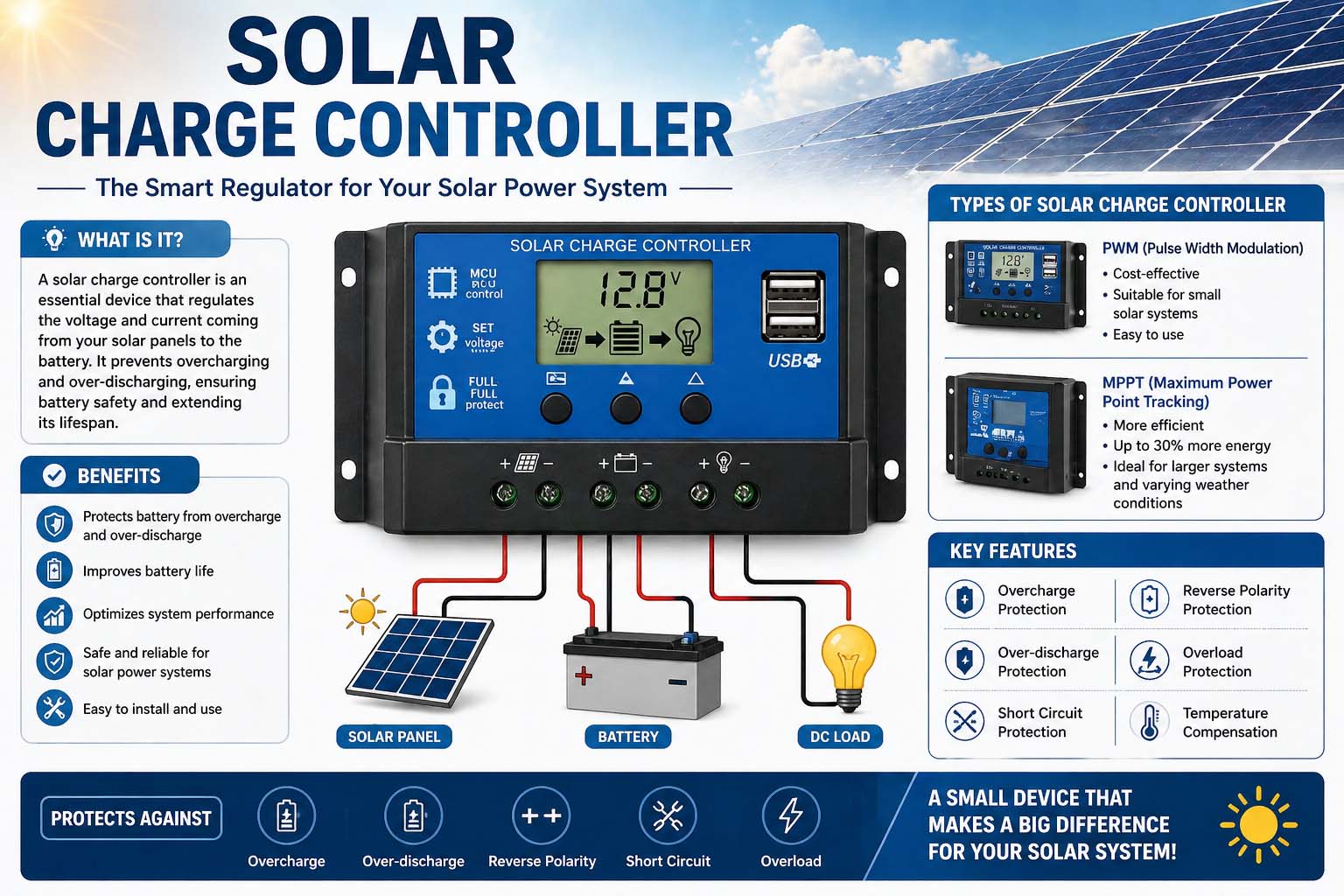
A solar charge controller is one of the most important parts of any energy system. It helps regulate the voltage and current flowing from solar panels to batteries. Without a proper controller, batteries can become overcharged, damaged, or lose efficiency over time. Whether you use power for a home, RV, boat, or off-grid cabin, understanding how a can help you build a better and safer energy system.
As solar energy becomes more popular worldwide, many people are installing solar systems to reduce electricity bills and become less dependent on the grid. A quality er protects your battery bank, improves charging efficiency, and increases battery lifespan.
What Is a Solar Charge Controller?
A solar charge controller is an electronic device placed between the solar panel and the battery. Its main job is to control the charging process. Solar panels can produce higher voltage than batteries need, especially in bright sunlight. If batteries receive too much voltage or current, they may overheat or become permanently damaged.
The controller ensures batteries receive the correct amount of power at the right time. It can also prevent reverse current flow at night, when solar panels stop producing electricity. This keeps stored energy from draining back into the panels.
In simple terms, a acts like a smart manager for your battery charging system.
Why Is a Solar Charge Controller Important?
Many beginners focus only on buying solar panels and batteries, but the controller is equally important. It provides several key benefits:
First, it protects batteries from overcharging. Overcharging can shorten battery life and reduce storage capacity. Second, it prevents deep discharge in systems with load control features. Third, it increases charging efficiency, especially in changing sunlight conditions.
A good solar charge controller also improves safety by reducing overheating risks. This is especially valuable in off-grid systems where batteries are used daily.
Types of Solar Charge Controller
There are two main types of controllers used in modern solar systems: PWM and MPPT.
PWM Solar Charge Controller
PWM stands for Pulse Width Modulation. This type is simpler and more affordable. It gradually reduces current as the battery reaches full charge. PWM controllers work best when the solar panel voltage closely matches the battery voltage.
They are a popular choice for small systems such as garden lights, RV setups, or basic home backup systems.
PWM controllers are cost-effective and reliable, but they are less efficient than MPPT models in cold weather or when panel voltage is much higher than battery voltage.
MPPT Solar Charge Controller
MPPT stands for Maximum Power Point Tracking. This advanced technology constantly tracks the best voltage and current combination from the solar panel.
An MPPT can convert extra panel voltage into usable charging current. This means more energy reaches the battery, especially during cloudy weather or colder temperatures.
MPPT controllers are ideal for larger systems, homes, and professional installations. Although more expensive, they often produce higher long-term savings through better efficiency.
How Does a Solar Charge Controller Work?
The charging process usually happens in stages. First is bulk charging, where the battery receives maximum current. Second is absorption charging, where voltage is controlled to safely complete the charge. Third is float charging, where the battery remains full without overcharging.
Some advanced controllers also include temperature sensors. These sensors adjust charging voltage based on battery temperature, improving safety and performance.
By managing these stages automatically, a solar charge controller helps maintain battery health over many years.
How to Choose the Best Solar Charge Controller
Choosing the right controller depends on your system size and battery type. Start by checking the voltage of your battery bank, such as 12V, 24V, or 48V. Then calculate the total current coming from your solar panels.
Your controller should support enough amperage for the full solar array. It is smart to choose a model with extra capacity for future expansion.
Also consider battery chemistry. Lead-acid, AGM, gel, and lithium batteries may require different charging profiles. Many modern controllers support multiple battery settings.
If efficiency is your top priority, choose MPPT. If budget matters more and the system is small, PWM may be enough.
Features to Look For
Modern solar charge controller models often include useful features such as:
LCD displays showing battery status and charging levels.
USB ports for charging small devices.
Bluetooth or Wi-Fi monitoring through smartphone apps.
Load terminals for lighting or DC appliances.
Temperature compensation for safer charging.
Built-in protections against overload, short circuit, and reverse polarity.
These features can make your solar system easier to monitor and maintain.
Common Problems and Solutions
Sometimes users face issues like batteries not charging fully or controllers showing error lights. Common causes include loose wiring, undersized controllers, damaged panels, or incorrect battery settings.
Always check cable connections first. Make sure panel voltage matches controller limits. Clean solar panels regularly to maximize output. If problems continue, consult the user manual or a qualified installer.
Regular maintenance helps your solar charge controller perform efficiently year after year.
Is a Solar Charge Controller Worth It?
Absolutely. Skipping a controller may save money initially, but battery replacement costs can be much higher later. Batteries are one of the most expensive parts of a solar system. Protecting them with the right controller is a smart investment.
Even small systems benefit from regulated charging. For larger systems, an efficient MPPT solar charge controller can significantly improve energy harvest.
Final Thoughts
A solar charge controller is the heart of any battery-based solar power setup. It controls charging, protects batteries, and improves overall system performance. Whether you need a small camping solution or a full home solar installation, selecting the right controller makes a major difference.